Easy Bee Plants with Anne Frey (297)
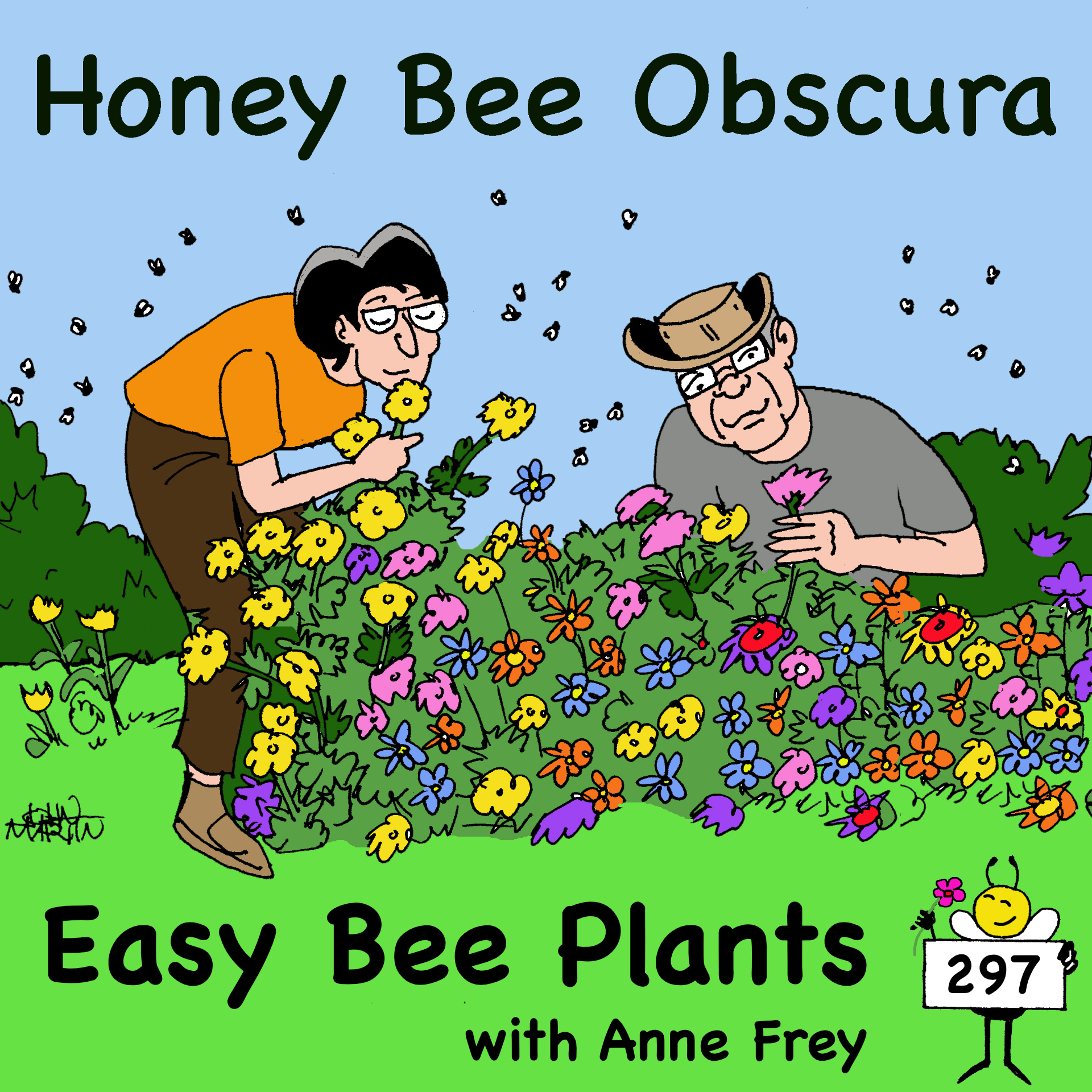
Jim Tew and Anne Frey of Betterbee explore practical ways beekeepers can improve forage without planting acres of wildflowers. They discuss basswood, sunflowers, soybeans, tulip poplar, bee-bee trees, invasive plants, and why a single flowering tree can sometimes accomplish more than a small flower bed. Their simplest recommendation may also be the easiest: where appropriate, leave some land wild and let locally adapted plants provide forage naturally.

 Apple Podcasts
 YouTube
 Spotify
 Amazon Music
 Overcast
 Castro
 RSS Feed
 What can the average beekeeper realistically plant to help honey bees and other pollinators? Jim Tew is joined by Anne Frey of Betterbee for a practical and sometimes wandering—in the best possible way—conversation about bee forage. They begin with the idea of planting wildflowers and quickly confront the question of scale. If meaningful forage can require substantial acreage, which plants for honey bees can a beekeeper with an ordinary backyard actually consider?
Anne suggests thinking beyond wildflower plots. A single well-chosen tree, such as an American basswood or linden, can provide an impressive concentration of flowers when it blooms. Jim recalls basswood honey from his years in Maryland and shares the story of a nearby 250-acre farm planted entirely in sunflowers—a spectacular sight that attracted people as readily as it attracted pollinators.
They also talk about soybeans, tulip poplar, bee-bee tree (Evodia), and the temptation beekeepers sometimes have to plant anything honey bees find attractive. That leads to an important caution: a plant being good forage doesn’t necessarily mean it belongs in your landscape. Some highly attractive plants can also be invasive.
Ultimately, Jim and Anne arrive at perhaps the easiest approach of all: when possible, leave some land wild. Locally adapted flowering plants—or what we often dismiss as weeds—may provide more benefit than an introduced wildflower mix. And a perfectly manicured lawn? From a bee’s perspective, Anne suggests it might not be much better than a parking lot.
You don’t need to transform an acre. Plant a native tree, tolerate some untidiness, preserve existing forage, and pay attention to what the bees are already telling you they like.
______________________

Thanks to Betterbee for sponsoring today's episode. Betterbee’s mission is to support every beekeeper with excellent customer service, continued education and quality equipment. From their colorful and informative catalog to their support of beekeeper educational activities, including this podcast series, Betterbee truly is Beekeepers Serving Beekeepers. See for yourself at www.betterbee.com

We’d like to thank Vita Bee Health for supporting the podcast. Vita provides proven tools for controlling Varroa—from Apistan and Apiguard to the new VarroxSan extended-release oxalic acid strips—helping beekeepers keep stronger, healthier colonies.
______________________
Honey Bee Obscura is brought to you by Growing Planet Media, LLC, the home of Beekeeping Today Podcast.
Music: Heart & Soul by Gyom, All We Know by Midway Music; Christmas Avenue by Immersive Music; original guitar music by Jeffrey Ott
Cartoons by: John Martin (Beezwax Comics)
Copyright © 2026 by Growing Planet Media, LLC

Episode 297 – Easy Bee Plants with Anne Frey
Jim Tew
Honey Bee Obscura Podcast listeners, I'm here with Anne Frey from Betterbee, and I'm Jim Tew and we want to talk with you for a while today about a topic that we always seem to come back to because it's enjoyable, it's rewarding, and it's never quite finished. And that is, what in the world can we do with plants to help our bees. Good morning, Ann.
Anne Frey
Hi Jim. Good to be here. I always appreciate you being here as I enjoy talking to you.
Jim Tew
We were wondering amongst ourselves before we started this recording here, what could be done? What could we plant? What could we do that would help our bees that was practical, that was enjoyable, that was rewarding.
And we came up with some things. We're just having a conversation here, listeners. It's just us, just the three of us.
We're just having a conversation and we'll talk about it here for a few minutes. I'm Jim Tew. I come to you here once a week at Honey Bee Obscura where I try to always talk about something you do with plain talk beekeeping.
Introduction
Welcome to Honey Bee Obscura, brought to you by Growing Planet Media, the producers of the Beekeeping Today podcast. Join Jim Tew, your guide. Through the complexities, the beauty, the fun, and the challenges of managing honey bees.
Jim hosts fun and interesting guests who take a deep dive into the intricate world of honey bees. Whether you're a seasoned beekeeper are just getting started. Get ready for some plain talk that'll delve into all things honey bees.
Jim Tew
And do you have a pollinator garden there at Betterbee or at your home?
Anne Frey
No, not at all. It's kind of ironic, but neither of those two places have a pollinator garden. I liked to try to You know, encourage people to plant things because then they see more bees on the flowers and they learn more about just appreciating Any insects that come to those flowers?
Jim Tew
It is rewarding. I know, I know, I know, listeners. You're th rolling your eyes thinking, well I want to learn about bees, I want to keep bees, I don't want to understand gardening and do all that.
But it is I gotta tell you that it's very enjoyable to see the bees go to the plants what they do, how they appreciate the plants being there. Do you have some numbers, Anne, about what kind of acreage is required to grow and do things?
Anne Frey
Yeah, just checking on the internet and a little bit from a raspberry farm I used to have bees at. The internet says one acre per beehive of mixed growth kinds of not all one thing that's gonna bloom all at one time, I suppose, is their point. And that's what the raspberry farmer said was he had five acres and he wanted five hives of mine.
So it seems to be a rule. Who has a spare acre to plant besides maybe farmers And what do people plant on their acreage? An acre is 208 feet by 208 feet, I also learned today.
That's a lot of land.
Jim Tew
That's a lot of land. And you know if you're buying Wildflower seed, I don't know what the price is. I never buy that much, you know a few ounces is all I ever need. I don't know what it would take
Anne Frey
People are always talking about the problems that honey bees are having and one of them is lack of forage or decline in quality of forage and So we want to do something, but what can people do is the question. It might not be planting a small patch of wildflowers, because I think that's more for humans' appreciation of pollinators and other insects. It possibly the only thing we can do is leave more land wild, in my opinion, because Acres and acres and acres. It's who is going to plant even one acre of something that's beneficial to bees if they're a homeowner
Jim Tew
Yeah, I know there's some movie stars and people like that who've dedicated their farms to wildflowers, to bees, but it can't be done. Can I tell you one short story that happened one time? and never again, right across the road from me or very near to me, I can step out at in the street here in front of me and look down and see the farm.
This nice 250-acre farm, Ohio farmland, sold. And it wasn't contiguous. It had some erratic boundaries to it.
So one of the cleverest things I've ever seen, the realtor Planted that whole farm in sunflowers. And the next spring, I thought it'd be corn or soybeans here in Ohio. This odd plant began to come up.
And I realized after a while that it was soybeans—I'm sorry, it was sunflowers. And when those things bloomed, it was just spectacular.
And it perfectly outlined the farmland that was for sale.
Anne Frey
That's amazing. aerial photograph of that would have been great.
Jim Tew
And I was up there every day. I thought there's not enough supers anywhere on my little acre. to get all this honey crop that's going to be coming.
And I got a good bump, but I didn't get an amazing bump. But what I did get was a bizarre appreciation and people would almost back up traffic stopping. To make pictures of this, and I could almost walk up there every day.
So I made all these sunflower pictures, I made videos, I really had a good time. And the land sold, and I thought it's going to become houses. No, a farmer bought it and dedicated it back to corn and soybeans.
So it was just one time But I have my story, I have my pictures, and I have my memories, and I still have a small honey crop from that I haven't used yet. And that's my story. One and done, one and done, used to outline a farm that was being sold.
So they filled it in or just outlined it?
Anne Frey
No, they it was solid. It was solid. That's great.
That's great. That's amazing. Now bees get something good from soybeans, right?
Jim Tew
But not corn. Oh. Reed Johnson at Ohio State has better information than I do.
He says they do And I have seen bees on soybeans, but it's a frustrating plant. I never get a honey crop from them. Years ago I had soybeans right behind my house.
I could find bees on soybeans in the canopies And they seem to be working them and they are a legume, but we never get anything.
Anne Frey
Just for pollen, maybe?
Jim Tew
People in Arkansas, if you got any Arkansas listeners, would you let me know? Do you guys get a soybean crop? Maybe John Zawislak
Anne Frey
John Zawislak, you're down there in Arkansas. Tell us. As far as big crops go, that was my hope that soybean would be a thing for honey bees.
But some places way out west I was driving one time across Nebraska and into Colorado and in western Nebraska, the whole place was covered with sunflowers and it was so dramatic. So that you know, if there are bees, I know that there's like canola. These are major agricultural crops though that would benefit bees.
It's Kind of like what can the average person do? And I like just getting away from the idea of land and crops and saying, go for one basswood tree. You know, if you have a backyard or a front yard plant one basswood tree and that's like a meadow of wildflowers 'cause it's this dense sphere of flowers.
And it blooms sort of late. If here it here it blooms in the week after Fourth of July and that's sorta late. The majority of our things bloom before July first and then again in mid-August and onwards.
There's kind of a slump in New York, part of New York for the July period except for Basswood.
Jim Tew
I trained under Dewey Caron at the University of Maryland, and I lived in Maryland for four years, and the state apiarist, John Lindner, of course he's not here anymore. Would always bring me basswood honey from Western Maryland. And I proclaim that to be my favorite, most distinctive honey.
I haven't had it in years. We have basswood in Ohio. I see it bloom, but there's never the continuity, I suppose, or the population of basswoods to make it a distinctive crop anymore.
Anne Frey
Upstate New York, especially in this area in eastern New York State, where Greenwich, New York better be is, to have a lot of American basswoods in the woods. And the town has a lot of European basswoods planted, so we do get a kind of a bump in the honey crop You know, there are nurseries around. You might not hear of it as basswood what people also call it Linden, which is probably the proper name for it.
Why do they call it basswood? It probably has something to do with the time that bass fish molt or something. Molt?
Do fish molt? spawn.
Jim Tew
Spawn. Yeah, you're on your own here.
Anne Frey
Hey, you know, well, why they call it Basswood? It's also called Linden. What's it also called?
Lime tree? Any nursery's gonna know it. If you say Basswood or Linden, they'll know.
Jim Tew
What I was going to say is it's very light wood. A very workable wood for lumber. When I was a serious woodworker I would occasionally use basswood for f if you wanted to stain it especially, but I never was a big person to stain. But I always thought it was ironic that basswood was used to make Section, honey sections in the old days, so you would buy basswood sections because you could crimp them into a square.
I don't want to get into comb honey production here off the cuff But I always thought that it was really unique that you cut down the honey source to make the basswood box to put the honey in that you wouldn't get because you cut down the source.
Anne Frey
Oh that's terrible.
Jim Tew
It was like a short circle. And A. I. Root actually planted basswood trees all around the property up there just for some of that purpose.
Anne Frey
Yeah, I have dreams when Betterbee expands into this other property that we have that I'll plant some basswood and maybe a tulip poplar. We don't have too many tulip poplars here, but I know they will grow. The thing that you're saying about the flexible basswood wood being used for comb honey being sort of ironic. I had that same feeling when I used to do maple syrup in my backyard.
And we also cut our wood for our house to burn, you know, so I was used to cutting down whatever tree was closest to the lawn, you know, and just sort of pushing back the woods a little bit And sometimes it would be a maple tree and I would just be thinking, This is ironic.
Jim Tew
This is a terrible thing.
Anne Frey
Yeah. I was cutting down little trees, you know, I wasn't cutting down sap producing big trees
Jim Tew
Hey, let's take a break here from our sponsor while we are remorseful about cutting down sources for our honey bees.
Betterbee
For more than 45 years, Betterbee has proudly supported beekeepers by offering high quality, innovative projects. products, providing outstanding customer service, many of our staff are beekeepers themselves, and sharing education to help beekeepers succeed Based in Greenwich, New York, Betterbee serves beekeepers all across the United States. Whether you're just getting started or a seasoned pro, Betterbee has the products and experience to help you and your bees succeed. Visit betterbee. com or call 1-800-632-3379. Betterbee, your partners in Betterbeeekeeping
Vita Bee Health
We'd like to thank Vita Bee Health for supporting this podcast. Vita provides proven tools for controlling Varroa. APISTAN and ApiGuard to the new VarroxSan extended release oxalic acid strips, helping beekeepers keep stronger, healthier colonies
Jim Tew
Things come and things go. We and that's ironic, we've talked about trees. I do have tulip poplars here and we do make a little bit of poplar crop, but when you keep say plant this, plant this I have to think, well, I'm doing that for some future beekeeper.
I mean, I don't plan on checking out tomorrow, but planting a tree is kind of a serious commitment to time to come. But I would plant trees right now in a heartbeat and hope someone else would enjoy them, it's not just for shade and beauty for nectar sources. You know anything about a shrub?
It's a big shrub called Bee.
Anne Frey
I used to read about that in Bee Culture a lot, but I've never seen it. Wait, is that Evodia?
Jim Tew
Evodia, yeah. Is the same? I think so.
If we're doing this wrong, listeners, I remind you, this is a conversation. So it's not supposed to be painful. This is just Anne and me and you talking.
I think it's Evodia, Ann.
Anne Frey
bee-bee tree, Evodia. I did plant a couple of Evodia trees at my former property I mean I called them trees. They grew fast and when I left they were probably twenty five feet tall, so but you called it a shrub, so I'm not sure. The one I have.
Jim Tew
I don't know what the word for it is, but it's got too many trunks. It must have five or six or seven branches. And I tried to cut it back just to one years ago and I finally just gave up.
So it grows in a clump So maybe it's a clump of five small trees that can't out compete each other. But and the bees and the other insects, the wasp The flies they are irrational about that plant. It's what blooms every other year—biennial.
Biennial, sure. It blooms every other year. But when it is, I mean it's just photographic stuff.
That little tree Shrub, whatever it is, it's about fifteen feet tall and about fifteen feet across. It cannot be making enough nectar reward. It's nectar.
There's no pollen So somehow those insects are being hoodwinked.
Anne Frey
Maybe, maybe. Maybe it the structure of it, you know, even if there's not enough nectar, just has a great smell. I've seen bees kind of crawling all over some large flowers I know of here at Betterbee and they're they don't even go inside sometimes. They just seem to be really attracted to the entire outside of the flower, the base of it, the stem where or the part where the flower attaches, it's unless maybe they're getting nectar or something exterior nectaries? What do you think, Jim?
Jim Tew
I don't know what's going on, Ann. I've stood there. It's the blooms are not always close to me. They're it's a florid, a cluster on a stipe, a little bit like Queen Anne's lace or a wild carrot, but they don't look that way, but they have all these little stems that have little tiny, tiny, unexciting flowers that all these insects are just crazy for And I need s I need to tell you right now after we've done all this and got everybody excited and we have all these stories, I don't think we're supposed to plant that.
Anne Frey
I'm not sure if it's really proper to be promoting that. Let's promote American basswood I wondered if they were really going bonkers for that because it was the time of year when nothing else was blooming, 'cause I've heard people say at the end of summer that They've seen like if their broccoli in their garden had gone you know, shot up and gone to flowers that they saw tons and tons of bees all over it and I was of the opinion that was because it was it was like late September by that time and there's nothing else around.
So that it appears that it's super attractive But it's maybe not in and of itself super attractive, but a kind of a desperation thing. And when does the bee-bee tree that we're not talking about actually bloom?
Jim Tew
I'm sorry, listeners, I d I don't know, but it's it's tends to be June.
Anne Frey
Oh okay, so not that reason then. But just for people to think about those things when you see bees jumping on something really desperately It may be super delicious and attractive or it may just be like we are starving for something and next thing they're gonna do is start robbing.
Jim Tew
We've gotten into a f I didn't mean to it but we're almost out of time, thank heavens, before we have time to get in trouble here. oh. But beekeepers plant a lot of things we really shouldn't be planting s like the Chinese tallow tree.
That's another one. Really the bees love it, but that thing just propagates itself like crazy and just button so beekeepers they gave the seed away Beekeepers have kind of a reputation for spreading things that we shouldn't be spreading. Or alternatively, if your bees love it, but I guess that's too selfish to say we're we're saying we're doing if our bees and everybody else can just get used to it.
Anne Frey
I think it comes back around to what I said earlier on, which is it might be best just to leave land wild, if at all possible, because a lot of times even when you decide to plant wildflowers They're not wildflowers from your area. They're wildflowers from, you know, a thousand miles away in the United States, but it's The things that are going to succeed the best are the wildflowers in your area and it essentially that means weeds. It's like leave it wild. Don't even attempt to call it a lawn or something and the town won't get mad at you for having tall grass because it's not grass, it's it's wild land. So It's an idea.
Jim Tew
You know, that's well said, and we're close to being out of time. I think we'll just stop on that. Listeners, Ann and I have not tried to give you recommendations other than plant something. and probably plant something that's native, plant some trees, make up a commitment to it. And I would say you can't walk by it. If you're a beekeeper and you've planted a few plants or a lot of plants and you walk by and you see bees on it
Anne Frey
You're gonna pull that phone out and start making pictures, so walking around on a lawn, a good lawn, there's not much to see usually and it for the bees opinion it might as well be a parking lot. There's you know, these lawns they're tidy. And they keep the soil from washing away, but it's not much good for bees.
Jim Tew
Well said. Thank you listeners for listening. Thank you, Anne, for having the topic suggestion and for having some good comments about it.
Sure thing. We'll talk to you next week. Bye.
Bye.
Beekeeper and Educator
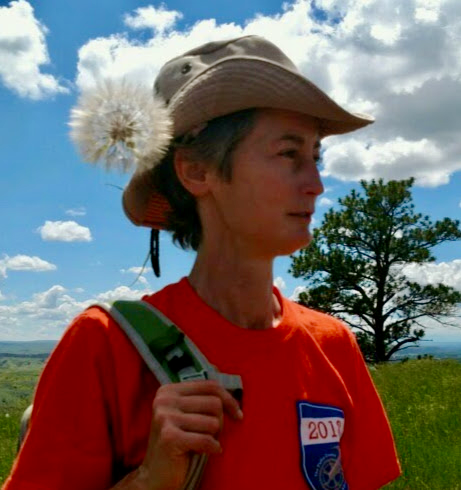
Anne lives in Greenwich, NY and since 2019 has been Betterbee's Head Beekeeper, teacher, and videographer (catch her on Betterbee's YouTube channel!). She first got bees in 1989 while getting a Biology degree, and like most of us, she was a "bee-haver" for just a few years, until she became a member of her local beekeeping club (the Southern Adirondack Beekeepers Association, or SABA), where she learned a lot from members and through club activities.
Anne became invaluable to SABA's operation and led the Annual Seminar and Bee School for many years. Beekeeping associations are so valuable to us because of the speakers and events, but also because of the casual networking, support, and mentoring that comes about when people find a group near them.
She became an EAS Master Beekeeper in 2002 and is still learning to this day. In her limited spare time, she reads sci-fi and rides her bicycle.


